

The wellness industry is now worth somewhere around $1.8 trillion globally, and the average person who participates in it doesn’t seem any happier or healthier for it. People are tracking their sleep, drinking adaptogenic mushroom coffee, doing breathwork on the way to cold plunges, and still feeling, by their own accounts, fairly miserable.
There’s a missing piece in most of these routines, and it isn’t another supplement or another app. It’s the practice of getting genuinely good at something that takes years to learn. Skill based hobbies, the kind that require regular, structured effort over time, do something for human well-being that no recovery protocol can replicate. They’ve quietly fallen out of fashion, and putting them back in might be the most underrated wellness move available.
What a Skill-Based Hobby Actually Is
The defining feature is the learning curve. A skill-based hobby is something where you can be a beginner, an intermediate, and an advanced practitioner, and the path between those stages takes years of regular effort. It rewards repetition, builds visibly, and never quite gets fully mastered.
Examples: musical instruments, languages, woodworking, cooking, mixology, swimming, tennis, climbing, photography, ceramics, chess, sailing.
Non-examples: scrolling, watching, consuming. Even most “wellness” practices fail this definition because they’re designed to be easily entered and easily left. You can’t be intermediate at a Sunday meditation app.
The Wellness Routine Most People Have
Pulled apart, the typical modern wellness routine consists of recovery (sleep, hydration, supplements), short-burst inputs (workouts, breathwork, sauna), and consumption (podcasts, books, retreats, courses). All of it is valid. None of it produces the specific psychological state that comes from working on something difficult for a sustained period.
That state has a name in psychology: skill-based mastery. The research on it is unusually consistent across decades. People who report progressing in a skill they care about score higher on measures of life satisfaction, lower on measures of anxiety and depression, and
report a stronger sense of meaning than control groups regardless of income, age, or fitness level. The benefit isn’t from the activity itself. It’s from the slow, structured improvement.
What’s Missing
Modern wellness has optimized for inputs and outputs. Sleep input. Cortisol output. Resting heart rate. Calorie burn. The thing it’s terrible at capturing is the slow accumulation of competence in something that has nothing to do with health metrics.
When people describe genuinely meaningful periods of their adult lives, the descriptions tend to circle around skill acquisition. Learning to play guitar in their twenties. Becoming a real cook in their thirties. Picking up sailing in their forties. The wellness routine almost never captures any of this, because the wellness routine was designed by people selling subscriptions, and subscriptions don’t reward five-year arcs.
How to Add One
You don’t need to add three. One is enough.
Pick something you’ve been quietly curious about for years. Almost everyone has a list. Then commit to a structured way of starting, because the cold-start problem is what kills 90% of attempts. Solo learners on YouTube quit within weeks. People who book a class show up.
A few examples of what this looks like in practice:
Mixology. Cocktail-making sits at an interesting intersection of chemistry, history, and hospitality. There’s a depth to it most people don’t realize until they’re a few months in. A local mixology program gives you the foundation in classics and technique that turns home bartending from random pours into a real practice. Within a few months, you’re the person friends ask to handle drinks at the dinner party, which has its own quiet social rewards.
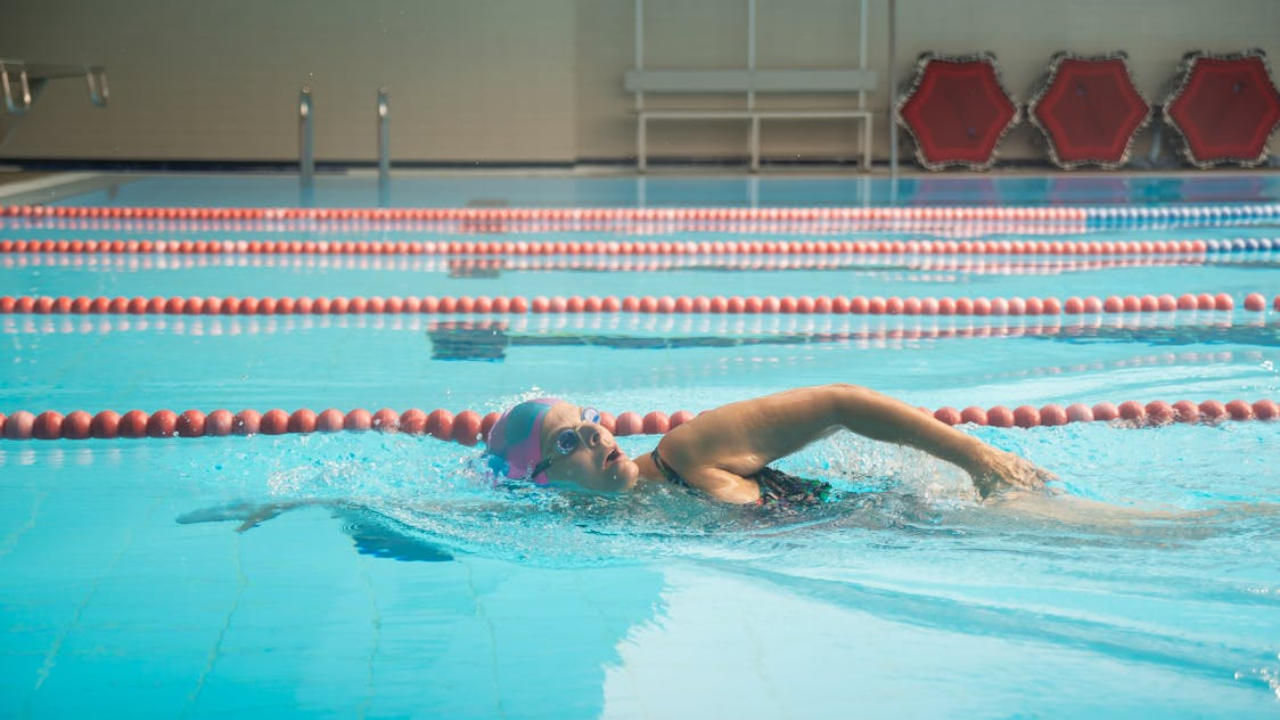
Swimming. Most adults who swim are essentially doing the stroke they learned as a kid, badly. Real swimming is a technical sport with significant skill ceilings. Working with a coach on form transforms the experience: the same lap time becomes effortless, the cardio becomes legitimate without being punishing, and the brain settles in a way few other activities replicate. Building regular swim practice into your week, with proper instruction, is one of the highest-return wellness investments available, and it lasts a lifetime.
Other directions. A martial art, a musical instrument, a foreign language, a craft that uses your hands. The specific choice matters less than the structure of pursuit. Pick the one that pulls at you and start.
The Mechanism
Why does this work when other wellness practices plateau? A few reasons.
The first is that skill-based hobbies create what psychologists call autotelic experience: activity that’s intrinsically rewarding, where the doing itself is the point. People in autotelic states report some of the highest levels of subjective well-being measurable.
The second is that progress in a skill is one of the few reliable sources of what feels like meaning. Modern life provides very little of this. Most jobs don’t have visible improvement curves. Most relationships plateau. Skills, however, keep getting better as long as you keep showing up.
The third is identity. Saying “I’m learning to box” or “I’m a pretty serious home cook” is a different kind of self-statement than “I do a lot of HIIT.” It’s something you are, not something you do. That distinction matters more for mental health than the wellness industry has ever quite admitted.
The Takeaway
The cold plunge is fine. The supplements might help. The meditation is probably worth doing. None of it replaces the experience of getting steadily better at something hard, in public, over years. If your wellness routine has felt complete on paper but flat in practice, that’s the gap.
Pick one skill, find a real way to start, and protect the time on your calendar like you protect the gym session. A year from now, you’ll have a thing that’s yours, that you’re better at than you were, and that no app could have given you.
Want to unlock greater wellness?
Listen to our friends over at the Wellness + Wisdom Podcast to unlock your best self with Dr. John Lieurance; Founder of MitoZen; creators of the ZEN Spray and Lumetol Blue™ Bars with Methylene Blue.
